
American Historical Association Annual Meeting
A roundtable session entitled the "Empires of the Plains: A World Historical Perspective" was organized by the director of the project Pekka Hämäläinen at the American Historical Association (AHA), in Denver, CO, USA on 6 January, 2017. The members of the project team presented their research on nomadic empires, which was followed by comments from Jonathan Skaff, and an open discussion with the audience.
The main focus of the panel was on the processes of connectivity, mobility, action, and exchange which were the basic mechanisms for building nomadic empires and for their longevity. The presenters explored the concepts of "kinetic empires," "empires of mobility," nomadic "peace," kinship, and sovereignty and placed them within a comparative perspective while discussing their individual case studies: the empires of the Lakota, Xiongnu, Blemmyes, Khazars, Golden Horde, and Rumi nomads. Numerous questions from the audience expanded this discussion further into the spheres of nomadic economic sustainability, physical and sacred geography, the silk and fur trade, the nature of the "shape-shifting abilities" of the nomadic states, such as from pastoral to "amphibian" polities.
Abstracts of the panel papers are available below:
Nomadic empires, imperial formations built by expansionist equestrian societies, are an important theme in world history. Yet they remain woefully undertheorized, their characteristics and histories distorted by sedentary-regime-centered teleologies. They have been labeled as shadow, mirror, or quasi empires, notions that assert that nomadic regimes needed exploitable agrarian states to materialize in the first place and remained structurally dependent on them even when they overshadowed them. Such notions capture something about the intimate relationship between nomadic and sedentary societies, but they also conceal as much as they reveal. They accept state-based territorial empires as paradigmatic and define nomadic regimes against them, focusing less on what they are than what they are not. They reduce nomadic empires to secondary historical phenomena: too parasitical, too imitative, and organizationally too hollow to achieve the self-sufficiency of primary empires. This paper seeks to move beyond the mechanistic and normative interpretations by exploring new ways to understand the powerful nomadic societies on their own conceptual and cultural terms. Using the Comanche Indians as an example, it proposes the notion of kinetic empires, power regimes that revolved around sets of mobile activities—long-distance raids, seasonal expansions, transnational diplomatic missions, semi-permanent trade fairs, and recurring political assemblies. The notion of kinetic empires places non-sedentary forms of power in the front and center, revealing how nomads turned mobility into a strategy and thrived by keeping things—violence, markets, attachments, possessions, themselves—fluid and in motion. Comanches ranged widely but ruled lightly. They wanted resources and loyalty, not unconditional submission or likeness, and they were highly selective conquerors. Their ascendancy rested not on sweeping territorial control but on a capacity to connect vital economic and ecological nodes—trade corridors, grassy river valleys, grain-producing peasant villages, tribute-paying colonial capitals—which allowed them to harness resources without controlling societies.
Nomadic empires throughout history grew into polities of immense proportions and power. They created a mobile gravitational pull that attracted diverse people, resources, and ideas and reoriented the world geopolitics around their own nomadic concerns. But what were those forces and strategies that ensured successful unity, rule, and expansion of nomadic empires, and the lack of which made them fall? Conventional historical approaches to these questions suffer from the predicament of Eurocentrism and do not account for cultural differences of highly mobile societies who possessed their particular worldviews and cultural strategies and values of relatedness, trust, sovereignty, rule, and political action. Moreover, conventional historical approaches to nomadic empires disregard variations in the representational value of many of these processes. Hence, there are difficulties associated with locating nomadic polities and interpreting their imperial actions especially in the contexts of mobility, organization, and representational modalities of power. I use the case of the nomadic Khazar Empire to explore the concepts and strategies of kinship politics; the sources of political authority and sovereignty; and the paradigms of political action among the imperial nomads. A particular type of self-scaling kinship organization was used as a mechanism for political incorporation, expansion, loyalty and trust, and allowed those nomadic empires to expand, contract, manage tribal allegiances, and maintain nested sovereignties among their subject groups. These abilities were closely associated with the nomadic political authority and social obligation extant among the pastoral communities and their rulers. The ability of the nomadic ruler to mobilize for action (raids, trade, diplomatic and ritual exchange) was perceived as the greatest value in keeping the empire running. In nomadic court rituals, imperial agency and cultural paradigms of political action were manifested through representational modalities of power and “inverse values” that stood in contrast to those known from the sedentary states.
Mobile pastoral lifeways have been regarded as constituting a critical weakness of nomadic empires, hindering governance and hampering economic growth. This paper, and the associated panel, argues the opposite – that the mobilities entwined in the social and economic practices of nomadic groups provided resilient elasticity to the institutions and structures of empires. Just as the so-called ‘mobilities turn’ in sociology has drawn our attention to the importance of the flows of goods, people, and information in solidifying social and economic systems, so may we further emphasize how the mobilities of whole communities, entire surpluses, and administrative infrastructure promote social, economic, and political coalescence in nomadic empires. Mass mobility of subsistence sources and raw materials in a primarily pastoral economy engender broader networks of staple and wealth distribution, as well as intricate matrices of inter-community socioeconomic interdependence. Periodic instances of propinquity in the circuits of nomadic communities also provide essential moments of social reification, as well as economic interaction, between numerous groups and across large territories. If we accept the notion of space as constructed through relations, then empires may be envisioned less as contiguous integrated territories and more as a complex network of integration for the extraction of resources and the assertion of authority. This propels our discussion of empires into realms of social rather than spatial centrality and cohesion, one which is more apt for investigations of nomadic regimes. Through a brief survey of the world’s first known nomadic empire – the Xiongnu of Inner Asia – this paper outlines the notion of nomadic regimes as empires of mobilities – i.e. entailing not merely ‘mobile’ spatial constructs but, more precisely, multiple mobilities that comprise institutions of governance, performance, surplus, distribution, and exchange in continual motion rather than permanently fixed to singular territorial nodes.
During the period between the battle of Manzikert in 1071 and the subjugation of the Celali rebellions in the early seventeenth century, nomadism represented a powerful political force in the borderlands between eastern Anatolia and western Iran, affecting the centers of Muslim power in Iraq and Christian states in the Caucasus as well. Older patterns of pastoralism as practiced by various Kurdish peoples and Arabs were to some extent supplemented and superseded by the newcomers from the east, including sundry Turkic speakers as well as the Mongols. While the impact of the Mongols was formidable initially, it gradually waned. In contrast, Turkic nomads developed complex and long-lasting patterns of interactions with sedentary peoples of the region, including Armenian and Syriac speakers. The Ottomans eventually emerged as the most significant political force in the area, yet this was a process which lasted for longer than a century. In her presentation, M. Petrovich will focus on the period which preceded Ottoman hegemony. During the 15th century, eastern Anatolia witnessed numerous attempts at establishing an imperial order, occasionally through a short-lived renewal of invasions from central Asia (by Timur), and subsequently in the internecine struggles between the tribal federations of Qaraqoyunlu and Aqqoyunlu ("black" and "white" sheep, respectively). The core of the presentation will analyze a side effect of the persistent violence in the region. Having been shaped by their pastoralist surroundings, many young men left as mercenaries to rise to positions of power and prestige across the Indian Ocean, in lands which were hungry for expert horsemen. Of particular interest to us will be the uses to which they put their military prowess, and the ways in which they coped with both forgetting and manipulating their obscure origins in order to achieve their goals in very different natural and social environments.
The Horde, commonly called the Golden Horde, rose in the north-western part of the Mongol empire after the fall of Baghdad in 1258. It covered great parts of Russia, Kazakhstan, and eastern Europe. It was ruled by a coalition of nomadic leaders in association with a ruler. The ruler, bearing the title of khan, had to be a descendant of the eldest son of Chinggis-khan. Like most empires, the Horde was multi-ethnic, multi-religious and multi-cultural. What makes it nonstandard is that the nomads controlled the imperial centre. During three centuries, they held an empire in which the cooperation between nomadic and sedentary communities was key to the social balance. In this presentation, I intend to show how the nomads fashioned their own imperial entity, how they developed long-term strategies to control the access to the natural resources, the trade routes and the market places. I will focus on the period of the Mongol Peace (Pax Mongolica). Between 1260 and 1360, an unprecedented commercial boom transformed the human landscape in western Eurasia. This flourishing epoch is conventionally called ‘the Mongol Peace’ in reference to the post-conquest stability of the Mongol empires (ulus) and relatively peaceful relationships between the descendants of Chinggis-khan. The North-South itinerary (“the Fur Road”) interconnected with the East-West itinerary (“the Silk Road”), at the level of the lower Volga basin: the heart of the imperial Horde. In this area, two major ways were passable, the eastern one towards north India and China, the western one through the steppes and the Crimean peninsula towards the Mediterranean and the Middle East. As I will show, the Horde was not only the stage of this dramatic change, but also the nomads played the leading role in the new inter-regional order.
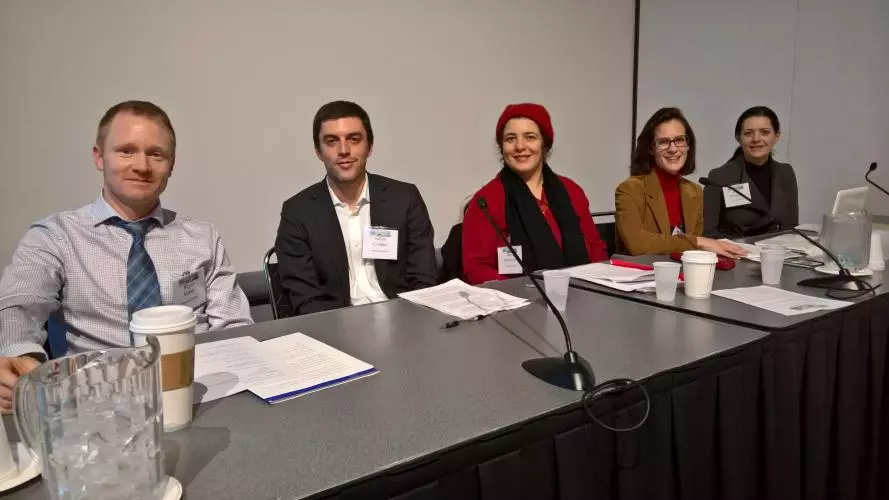
A roundtable session entitled the "Empires of the Plains: A World Historical Perspective"